The Last Invention

I recently listened to a very interesting podcast called The Last Invention. It is an eight part series giving the history of artificial intelligence (AI) and the controversy surrounding it. Here’s what everyone agrees, AI will be groundbreaking technology that radically changes our world! Some think it ushes in a utopia while others believe that it could cause the destruction of mankind.
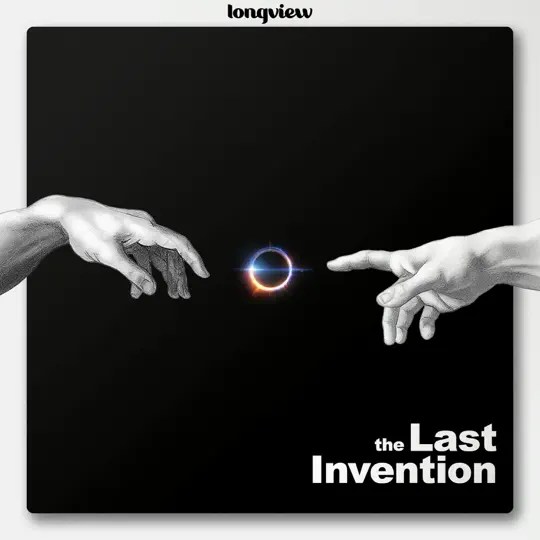
This podcast helped me tremendously to simply begin to grasp the AI terms. For instance, people talk often about artificial general intelligence (AGI). This is the technological breakthrough at which time AI achieves human-like intelligence with the ability to adapt and learn like humans do. And here’s the startling thing, many believe that we are three years away from this achievement.

The podcast also helped me dial in the AI players. It is not as long a list as you might imagine. Sam Altman, the CEO of OpenAI, the company that developed ChatGPT, is certainly one of them.

I developed a little cheat sheet of key terms and people. Truth be told, AI wrote it for me! I’m sharing that here.

Give a listen. And begin the conversation. What is good about AI? What might it help us do? And what is scary about AI? If we lost control of this powerful tool, what might happen? Should all people and nations have the freedom to develop this? Is it as dangerous as, for instance, nuclear weapons? These are the kind of questions on our horizon.

Support

I have been enjoying the Olympics in Paris. I’m watching stuff that I only see once every four years! Sports like badminton, table tennis, beach volleyball and three-on-three basketball.

One thing I have noticed. All the teams are putting on a clinic about how to support a partner during competition. It is all about support! There are no eye rolls. No shoulder shrugs. No verbal abuse. It is all about building up your partner – especially after a mistake! Beach volleyball players give a hug or fist bump after every play!

Badminton players show constant encouragement.

I wonder what this says to most of us in life? That people around us excel when we believe in them. They give their best when they feel supported.

I want to redouble my efforts to be a great partner – on the pickleball court, at church, in my marriage, and in my family.


More Chosen

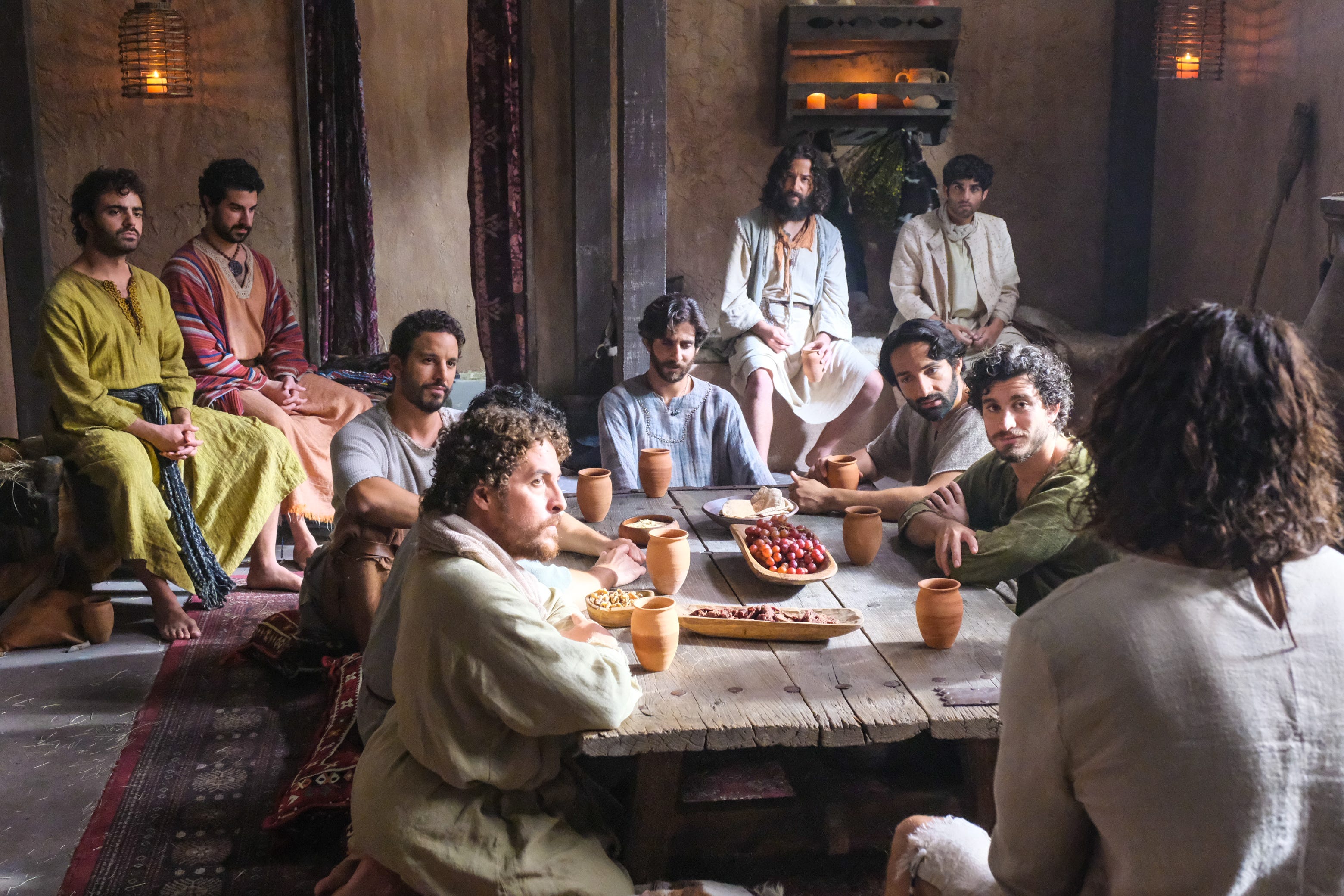
I continue to enjoy the Chosen, a mini-series about the life of Jesus and his disciples. In season four, Denise and I just watched the raising of Lazarus.

It is the pregnant moment when Jesus gets word that Lazarus is sick. And Jesus decides not to go to him, much to the dismay of all his disciples. And then they get word that “Laz” has died. But Jesus cryptically says that he is merely asleep.

The disciples are worried about going back to Bethany, because it is near Jerusalem. And the last time they were in Jerusalem, thinks got tense with the religious leaders. Is more of that on the horizon?

At the burial tomb, things get even more wild. Mary and Martha are broken up that Jesus did not come when they sent word. Jesus is claiming that he will “resurrect Lazarus.” And the disciples stand behind Jesus looking very bewildered.

Jesus asks the men to remove the stone from the tomb, but everyone freezes. Should they do this? The women even warn that it has been four days and will stink. But Jesus is not dismayed. Roll away the stone!

And so they do. And out comes the mummy-like body of Lazarus. Eyes blink twice. Are they seeing this?

Word spreads like wild-fire. Jesus truly is a miracle worker. And he has just performed perhaps his greatest miracle to date. But darkness is on the horizon. Word about Jesus is reaching Jerusalem. Not all are happy with his growing fame.

For those who have not seen an episode of the Chosen yet, catch it here: https://watch.thechosen.tv/


The Coming Wave

I have been enjoying the book called The Coming Wave by Mustafa Suleyman published in 2023. In his book, Suleyman describes the history of key transformative technologies.

These important technologies have had far-reaching impacts on human society, economy, and culture, shaping the course of history and laying the groundwork for further technological advancements. Suleyman’s recognition of these historical examples likely underscores the importance of understanding the potential implications and societal impacts of emerging technologies.

Here’s his list of key transformative technologies:

  1. Language: The development of language enabled humans to communicate complex ideas, coordinate actions, and share knowledge across generations, facilitating cooperation, culture, and societal organization.
  2. Fire: The controlled use of fire by early humans provided warmth, protection, and a means to cook food, leading to improved nutrition, expanded habitats, and the development of various technologies.
  3. Agriculture: The transition from hunter-gatherer lifestyles to settled agricultural societies marked a significant turning point in human history, leading to the cultivation of crops and domestication of animals, which enabled surplus food production, population growth, and the rise of civilizations.
  4. Writing: The invention of writing systems allowed humans to record and transmit information across time and space, facilitating the development of complex societies, legal codes, literature, and scientific knowledge.
  5. Wheel: The invention of the wheel revolutionized transportation and facilitated the movement of goods and people over long distances, leading to the development of trade networks, urban centers, and the expansion of civilizations.
  6. Navigation: Innovations in navigation techniques, such as the use of stars, compasses, and maps, have facilitated exploration, trade, and cultural exchange, leading to the interconnectedness of societies and the expansion of empires.
  7. Metallurgy: The discovery and mastery of metalworking techniques, such as smelting and alloying, enabled the production of tools, weapons, and infrastructure, driving technological innovation and societal development.
  8. Mathematics: The development of mathematical concepts and techniques enabled humans to quantify, analyze, and understand the natural world, leading to advancements in engineering, astronomy, and other scientific disciplines.
  9. Medicine: The evolution of medical knowledge and practices, from ancient herbal remedies to modern healthcare systems, has improved human health, increased life expectancy, and mitigated the impact of diseases and injuries.
  10. Currency and Trade: The development of standardized forms of currency and systems of trade enabled the exchange of goods and services, facilitating economic growth, specialization, and the rise of commercial networks.
  11. Printing Press: The invention of the printing press by Johannes Gutenberg in the 15th century enabled the mass production of books, leading to an explosion of knowledge dissemination, literacy, and cultural exchange.
  12. Electricity: The harnessing and widespread distribution of electricity revolutionized society, enabling the development of modern infrastructure, industries, and communication systems.
  13. Steam Engine: The invention of the steam engine, particularly the improvements made by James Watt, powered the Industrial Revolution, driving machinery, locomotives, and steamships and enabling new modes of transportation and industrial production.
  14. Automobile: The invention of the automobile transformed transportation, leading to the development of road networks, suburbs, and changes in lifestyle and commerce.
  15. Industrial Revolution: The Industrial Revolution, driven by innovations in manufacturing, machinery, and energy sources such as steam power, transformed economies, societies, and daily life, leading to urbanization and the rise of modern capitalism.
  16. Agricultural Revolution: Advances in agricultural technologies, such as the development of irrigation systems, crop rotation, and mechanization, increased food production and led to population growth, urbanization, and the rise of civilizations.
  17. Telecommunications: Technologies such as the telegraph, telephone, and later the internet revolutionized communication, enabling instant global connectivity and the exchange of information.
  18. Nuclear Technology: The invention of nuclear capabilities for war, medicine, and power generation.

Suleyman offers this historical review of transformative technologies to demonstrate how prolific and unstoppable they became. He also conjectures that Artificial Intelligence will become similarly as big and expansive.


No Trust

Americans for the most part are losing trust in most everything. Once upon a time, Americans trusted institutions like police, medical professionals, and even the church. No longer. Americans trusted institutions at a 48% level in 1979 and only a 26% level in 2023. (Gallup, JULY 6, 2023).

It is interesting that the institution that Americans trust the most is “small businesses” at 65%, but even that trust has slid 5 points in just two years. At the lowest end of the trust meter… drum roll… congress! They have a trust rating of just 8%.

Trust of pastors and religious leaders has also eroded steadily. It sits now at just 32%. And this makes it hard on those of us who are pastors who wish to abide by the Bible’s command to leaders, “Now the overseer is to be above reproach,” (1 Tim 3:1). 

Where will this ultimately leave us as a country? By our nature, we are a species who need to trust each other. Think about anything of value that you wish to build, create, or protect. It requires people to come together and trust each other. And think about a major war. None of us wants a war, but if it comes, you had better be a people who are able to trust each other.

Sobering. My hope is for some sort of change. But this must begin with people leading lives that earn trust. May God empower us.


The Spread of Pickleball

People who know me well know that I love pickleball. It is just a great game this gives easy access for millions to try it, and hours of enjoyment (and exercise too) for those of us who are devotees.

I’m always interested when I hear something about pickleball. This year, author Dave Berry, wrote a blog about things that happened in 2023. Kind of a year in review. This is the way he started off that article.

It was a year of reckoning, a year in which humanity finally began to understand that it faces an existential threat, a threat unlike any we have ever faced before, a threat that will wreak havoc on our fragile planet if we fail to stop it — and it may already be too late.

We are referring, of course, to pickleball.

Nobody knows where it started. Some scientists believe it escaped from a laboratory in China. But whatever its origin, it has been spreading like rancid mayonnaise ever since, to the point where pickleball courts now cover 43 percent of the continental U.S. land mass, subjecting millions of Americans to the inescapable, annoying POP of the plastic ball and the even more annoying sound of Boomers in knee braces relentlessly telling you how much fun it is and demanding that you try it.

Dave Berry, Dave Barry’s 2023 Year in Review: Yes, the situation is hopeless, Boston Globe, Dec. 31, 2023

I love a little hyperbole. Just makes life more fun. But Berry is not far off. The sport is spreading like gangrene! And it is getting younger! I’m regularly playing with twenty somethings who have an athleticism that I remember and admire. 


The Forgotten Christmas Character

There are some characters that are common to Christmas. It might be a star or Santa. A tree or Christmas wreath. The manger scene, complete with wise men, might even be somewhat common.

However, there is a person that is quite prominent in the Bible’s original Christmas story, but who is nearly forgotten today. That person is John the Baptist. John was born to parents, Zechariah and Elizabeth. Zechariah was a priest, and he even had a visit by an angel to disclose that his elderly wife would be expecting a baby, much to his dismay.

Few today know this. John the Baptist was a relative of Jesus, likely his cousin. Mary met with John’s mother, Elizabeth, while they were both pregnant (Lk 1:39).

John plays an important role in the Christmas story. His father even offers a prophecy over him that he will be a prophet who paves the way for the future Messiah. And that is exactly what John did. He prepared the way for the arrival of Jesus.

The words of John the Baptist about himself still ring true today, “He must increase, but I must decrease” John 3:30. For every follower of Jesus, that is our great reminder at Christmas. We wish to make Him more prominent and ourselves less the center of attention. We welcome you Jesus.


Jail Time for Hate Speech

Dr. Juhana Pohjola is a Finnish pastor who is threatened with jail time for “hate speech.” What has this mild-mannered pastor done? He has promoted an historical view of Christian sexuality held by millions of Christians over countless generations.

Here’s a link to the article from the International Lutheran Council about Dr. Pohjola. He was charged in 2019 with “incitement against a group of people.” What did Pohjola do that was so inciteful? He distributed a booklet, first written in 2004 called “Male and Female He Created Them.” Here’s the booklet.

While I realize that many hold the view that homosexuality, and all forms of modern gender theory, are normal and accepted, it is important to affirm that many do not hold this view. And it should not be punishable to hold the counter view which has been affirmed around the world by many cultures spanning millennia.

We enter dangerous territory when certain speech (and the thinking that goes with it) is stifled. As a caveat however, Christians can never promote violence against those who do not hold our views. As Dr. Pohjola said after being charged, “Every human being, created by God and redeemed by Christ, is equally precious.” All are made in the image of God and are given opportunity to know God whether through general revelation or special revelation.

I stand with pastors and Christians in other countries who face difficult circumstances because they affirm their Christian faith.


Evaluating Prophecy

Paul tells the Corinthian church, “earnestly desire the spiritual gifts, especially that you may prophesy” (1 Cor 14:1). He tells the Thessalonians, “Do not quench the Spirit. Do not despise prophecies, but test everything; hold fast what is good” (1 Thess 5:19-21).


Anglican author and rector, Michael Green, defines prophecy as “a word from the Lord through a member of the body, inspired by the Spirit, and given to build up the rest of the body.”


Whenever someone offers a prophetic word, the church is called to test it. The church, or individual receiving the prophecy, is to weigh it and evaluate its accuracy and benefit. Unlike Old Testament prophets, those who prophecy in the New Testament are called to be tested for truthfulness.

It can help to have some criteria that instructs us with this evaluation. Michael Green wrote a commentary on 1 Corinthians entitled, To Corinth With Love. In his commentary he provides helpful criteria for the evaluating of prophecy. He suggests asking seven questions to consider when “weighing what is spoken.” Here’s the list.

  1. Does it glorify God rather than the speaker, church, or denomination?
  2. Does it accord with Scripture?
  3. Does it build up the church?
  4. Is it spoken in love?
  5. Does the speaker submit him- or herself to the judgment and consensus of others in spiritual humility?
  6. Is the speaker in control of him- or herself?
  7. Is there a reasonable amount of instruction, or does the message seem excessive in detail?—[Michael Green, To Corinth with Love (London: Hodder & Stoughton, 1982), 77-78.]

    One author added an eighth potential criteria:
  8. Is the speaker demonstrating the fruit of the Spirit in his or her life?

    Prophecy can be a powerful spiritual gift when used correctly, but can be destructive when abused. Rightly assessing the word becomes as important as receiving it.


Plant Saved

It is hard for me to throw away living plants.  I always want to give them a second chance.  Sometimes, it takes just a little TLC for a plant to revive and even thrive.

Orchids are a great story in this way. Often times we get orchids as gifts. Once they are done blooming they head for the yard waste bin.  That’s just so hard for me.  So I keep the orchids, and even take some discarded ones from others at times!  It is so rewarding when an orchid throws a new spike and produces more great blooms.

Here’s a good example of an orchid that I save.  It may have taken a year for the plant to bloom again, but wow is it worth it!